Pet Product Development & Manufacturing Network
Built for global pet brands.
Wholesale pet supplies, OEM / ODM and private label — product development coordinated through one manufacturing network.
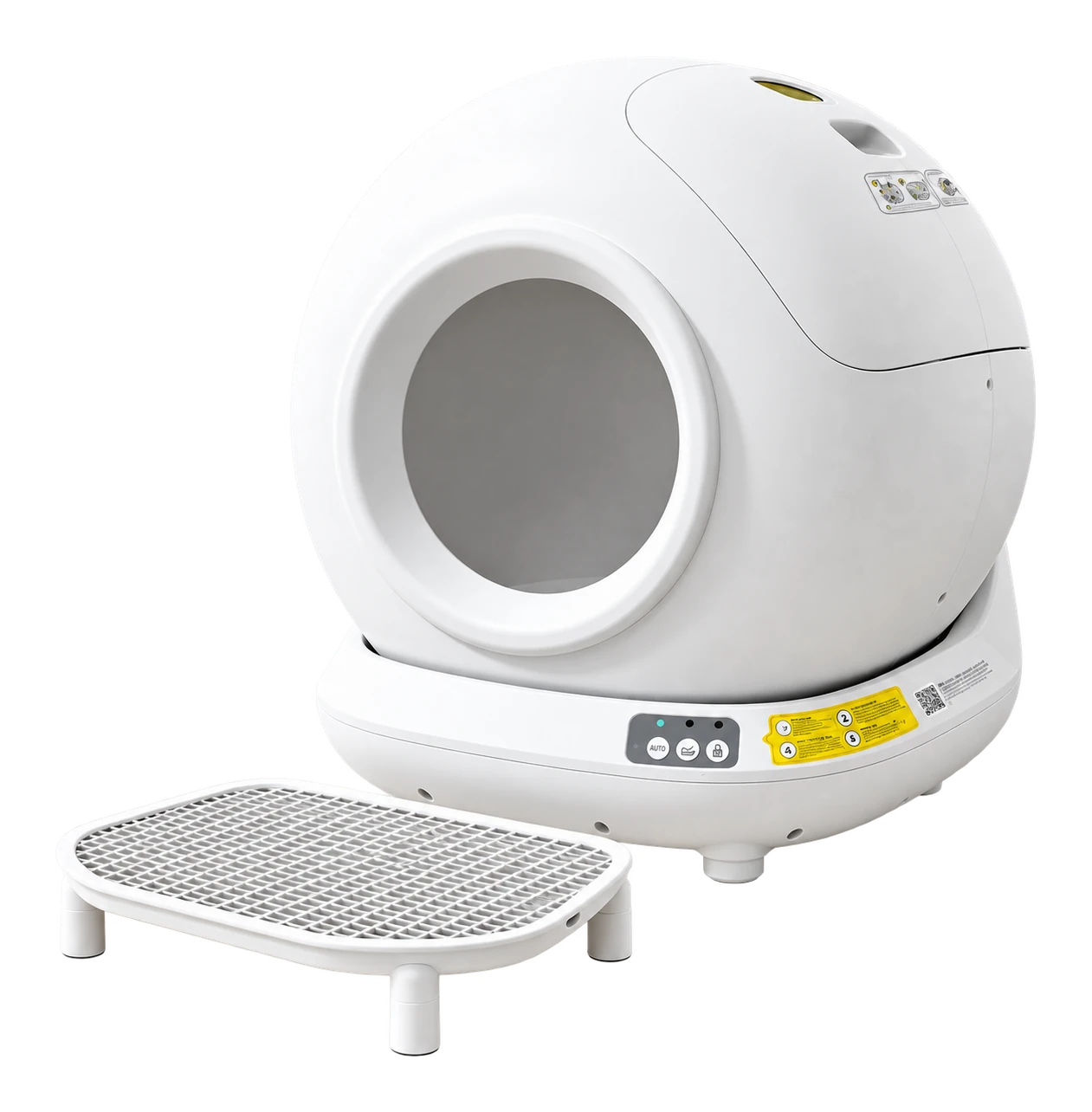
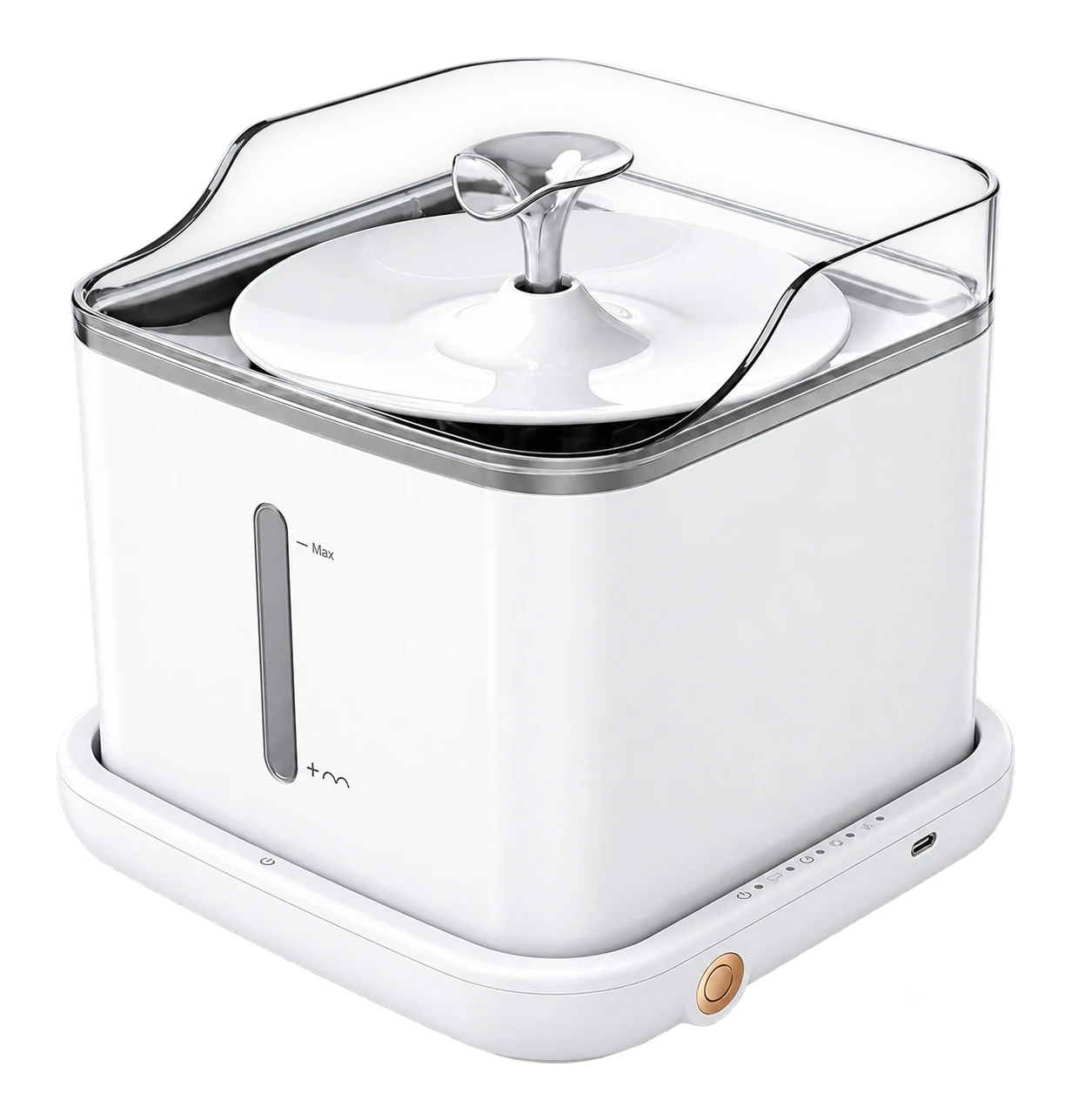
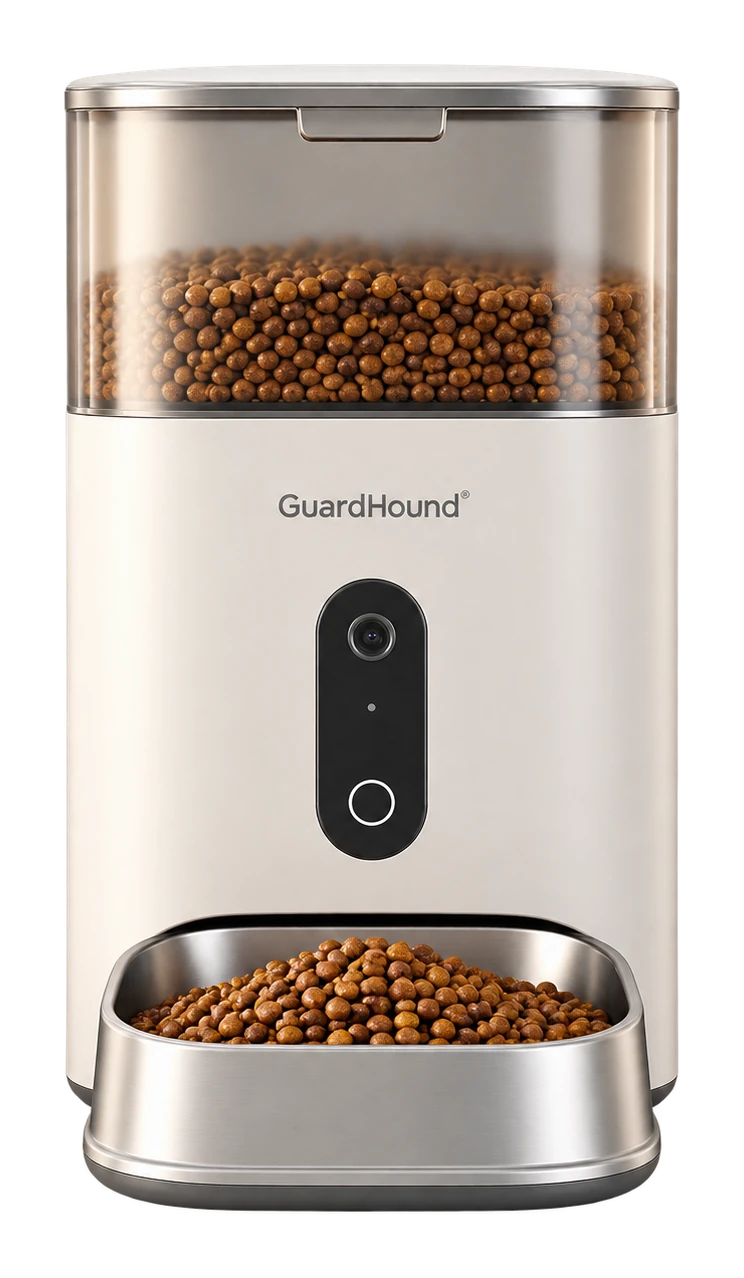
What we actually do
Six capabilities, one project system.
GuardHound is a product development and supply company working through a manufacturing network. One project system carries a product from brief to container — and one team stays accountable for it.
GuardHound coordinates product definition, engineering, manufacturing partners, quality and delivery through one accountable project system. The product definition is held here; the production partners who can meet it are matched, specified for and coordinated from here.
So a programme with us works less like placing an order and more like running a project — a written specification at the centre, and evidence at each stage from brief through to the loaded container.
How a programme runs
From requirement to delivered container.
Seven stages, each with a defined output. The point is not the diagram — it is that every stage ends in something written down, so the specification cannot drift between the sample you approved and the carton that ships.
Requirement
Product category, target market, quantity band, certification needs and timeline. We answer with questions and a scope, not a catalogue.
Product & supplier matching
The brief is matched against the existing range and against the manufacturing network, and we confirm which lines can actually meet the specification.
Product definition
Materials, dimensions, colourways, electrical standard, firmware and documentation language fixed in a written specification before tooling is committed.
Sampling & engineering
Samples or pre-production units are produced and reviewed against that definition. Structural and functional changes are scoped and quoted before they are built.
Validation & quality coordination
Checks are placed at the agreed points in the run rather than only at the end, so a deviation is caught while it is still cheap to correct.
Packaging & production
Retail-ready cartons, private-label artwork, labelling and bagging released against the same specification the order was placed on.
Shipment & delivery
Cartons, pallets, shipping marks and export documentation prepared and staged for your forwarder or ours.
Every stage has an output. A written scope, a fixed specification, an approved sample, a coordinated run, a released pack and a staged shipment — one chain, one point of accountability.
Manufacturing evidence
The network, in operation.
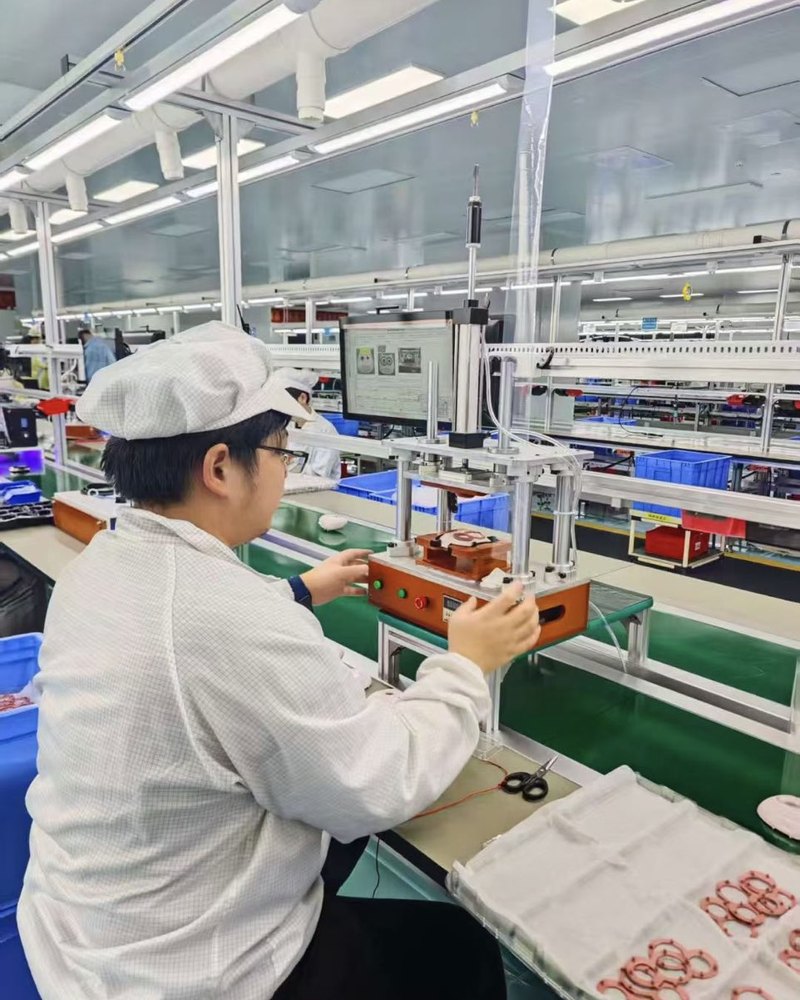
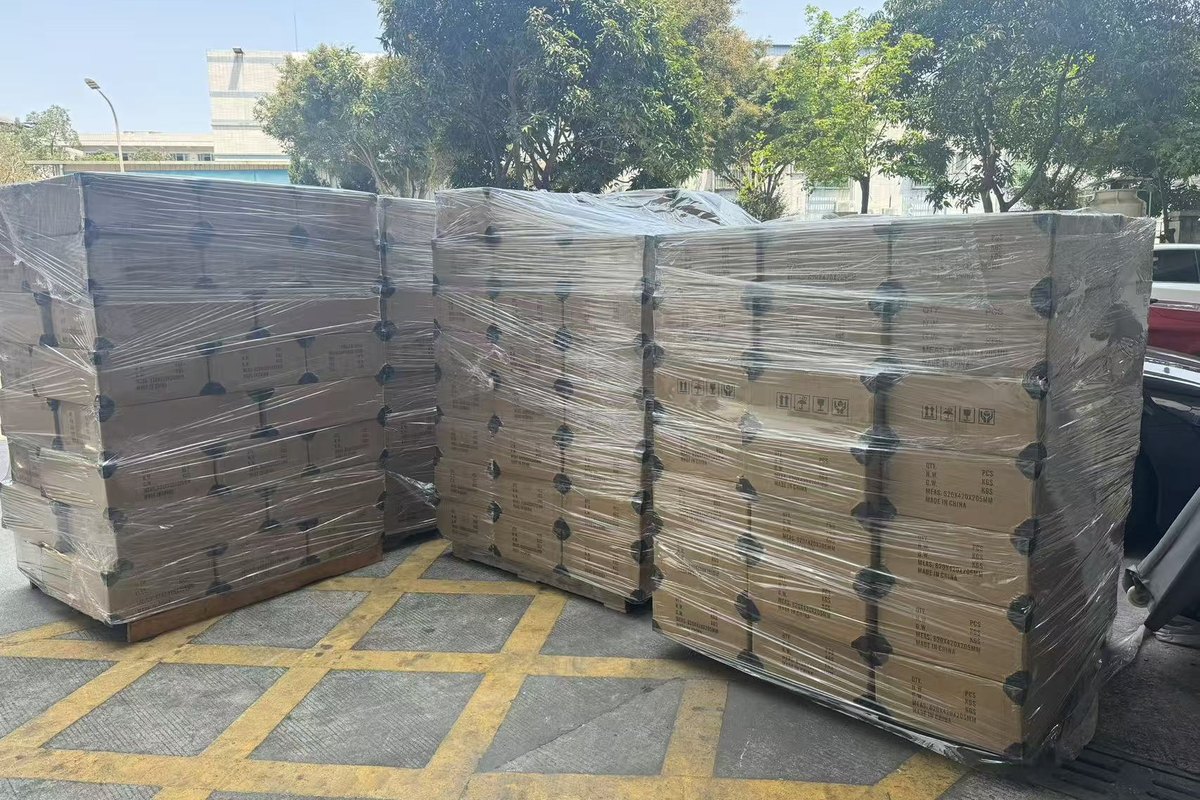
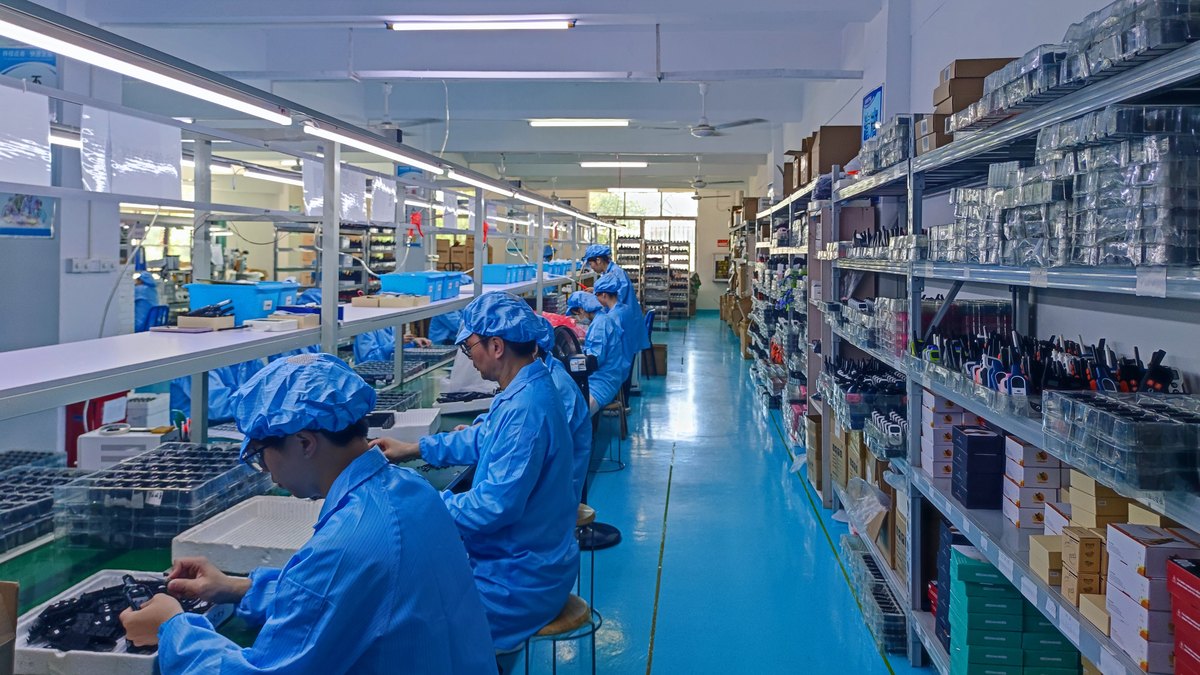
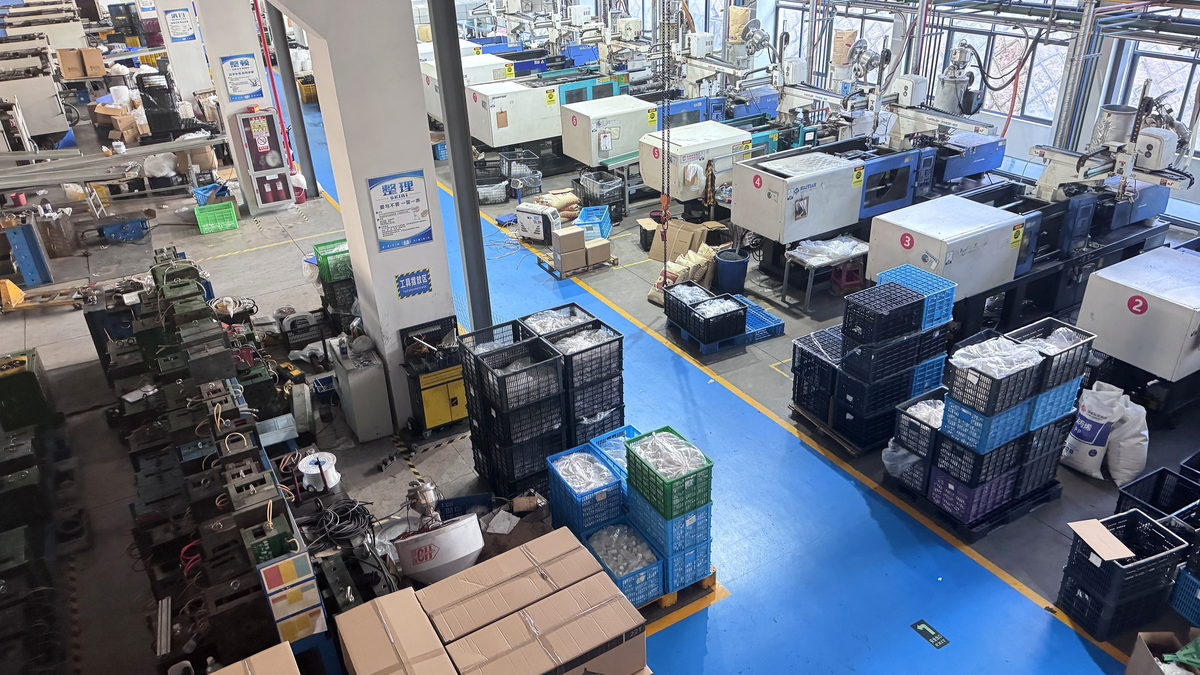
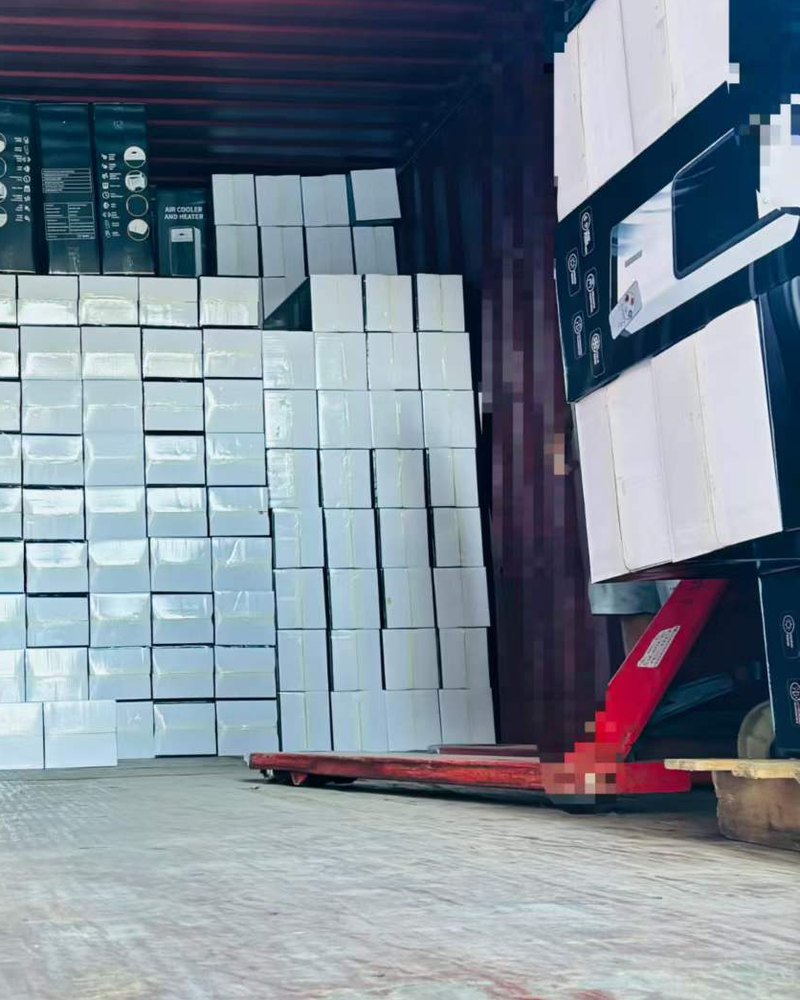
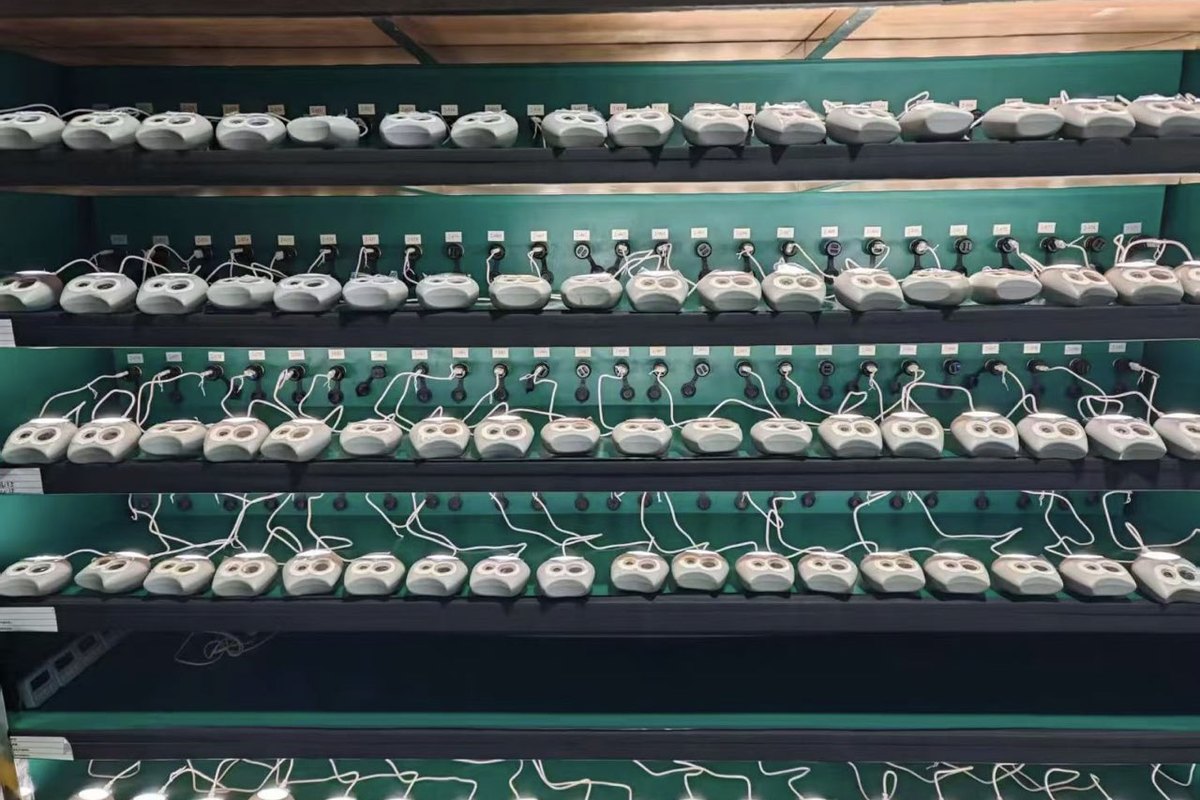
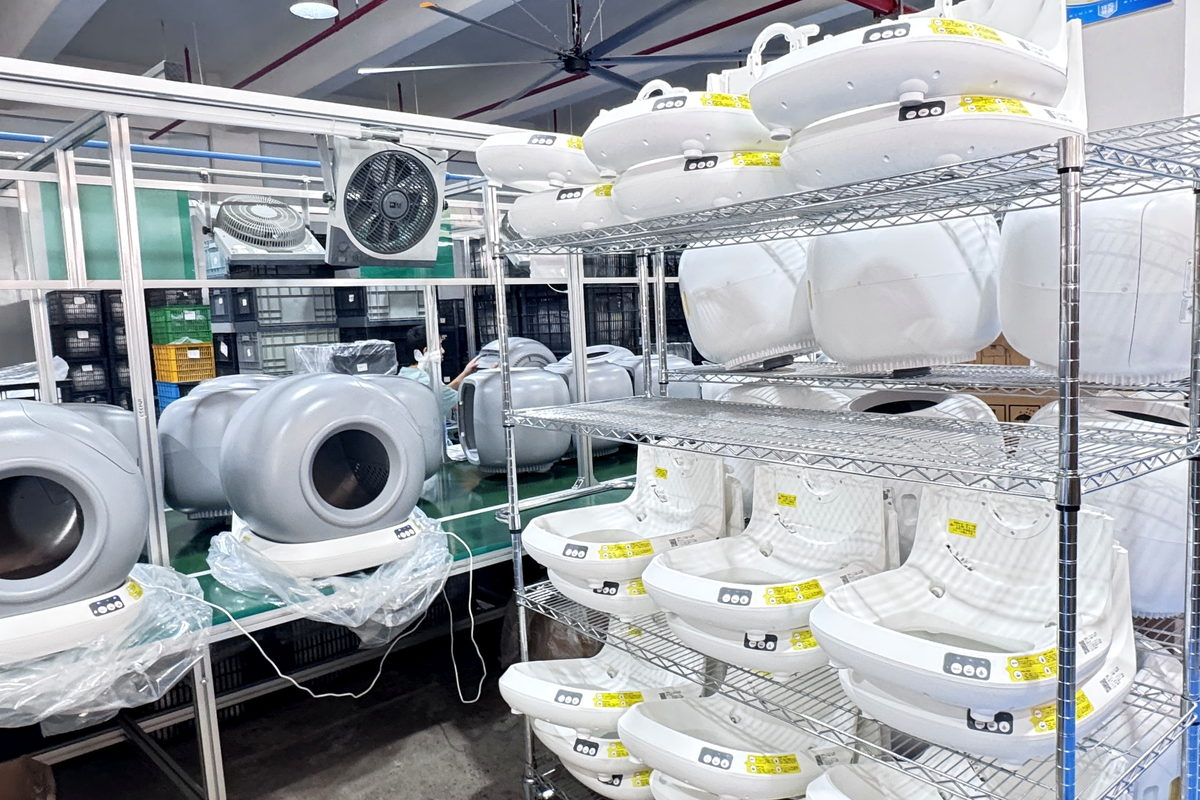
These are photographs of the production partners we coordinate: moulding, finished-goods staging and packing, as they run. They document what the network physically does — not ownership, floor area or capacity.
What these photographs are evidence of
- A running electronics line, with assembly stations, component stores and work-in-progress on the floor.
- Moulding at production scale, with machinery in service and material staged along the aisle.
- Electronic assembly performed at a bench against a released specification.
- Cartons palletised, wrapped and loaded into the container for export dispatch.
What they are not evidence of
- Ownership of any plant, or a floor area, machine count or annual capacity figure.
- Certification, audit status or a published approval programme.
- Functional bench-testing, or an inspection record set for any specific product.
- Output rate, headcount or order volume for any line.
The evidence behind this page
Five photographs are currently published, used across six places on this page. Each is filed under one of three lanes, answering a different question a buyer asks before committing. New photographs are filed into the same three lanes, so the set grows without the page being rebuilt.Production
Can they actually make it at volume? Lines, assembly stations, moulding and work-in-progress on the floor.
Boundary: shows that production runs. Does not establish ownership, floor area or capacity.
Quality
Is the specification checked before it ships? Units staged for functional test off the line, against a released specification.
Boundary: this is the weakest lane. It shows that a check point exists; it does not yet include bench-test records or a published audit set.
Delivery
Can they get it out the door? Cartons palletised and wrapped, containers loaded and secured for export.
Boundary: shows dispatch activity. Does not disclose order volumes or client identities.
Client-brand collaborations are recorded internally and are not published here: the brands on those cartons belong to our customers, not to us, and the standing rule on this account is that a client or third-party brand is never exposed without written permission.
Product development & engineering
What we can develop, not just source.
Sourcing gets you the product someone already makes. Development gets you the product your market needs. The work below is what we actually drive — and where a requirement sits outside it, we say so before quoting rather than after.
Product world 01
Smart pet products.
Connected, electronic pet products — the category most OEM and ODM programmes are built around, and the one that carries the most engineering risk.
Product world 02
Pet essentials.
The non-electronic volume lines that fill out a container alongside the smart range — and the ones that let a mixed programme actually load properly.
OEM / ODM & private label
Three ways to build a programme.
Most buyers do not need a brand-new product. They need the right product, made to their specification, in their packaging, at a quantity that works. Pick the depth that fits — scope is quoted before anything is committed.
Existing range programme
Order established lines as they are, combined into one mixed programme rather than five separate purchase orders.
- Range selection across smart and essential lines
- MOQ confirmed per SKU, not per catalogue
- Carton plan built so the load is used properly
- Sampling available before bulk
Private label
Your brand on the product and the carton, against a specification that stays fixed through the run.
- Logo application, print or label by surface and volume
- Colourways across the selected lines
- Retail-ready cartons and private-label artwork
- Instruction documentation in your market’s language
OEM / ODM development
Your specification, or an adaptation of an existing platform, taken through engineering before it is built.
- Structural and functional change scoped per project
- Voltage and plug standard matched to destination
- Firmware and documentation language set per market
- Not every line accepts every change — we say which, and why
Quality & delivery coordination
How the work is verified.
Quality on a bulk programme is mostly decided before production starts: a written specification, agreed check points, and one person accountable when something is wrong. Below is the record set a programme leaves behind.
Sample records
The approved sample and the specification it was approved against, so the reference for the run is a document rather than a memory.
Engineering records
Part definition, tooling change and the functional scope agreed before commitment, with what changed and when.
Quality coordination records
The agreed check points in the run and the result at each one. Labelling and bagging are part of the released process.
Packaging records
Carton artwork, handling marks and market documentation reviewed against the same specification the order was placed on.
Shipment records
Quantities, carton count, pallet plan and shipping marks confirmed before goods are released for loading.
Every project should leave verifiable delivery evidence — not a promise that it will be fine.
Who we work with
Built for buyers who own the outcome.
Our programmes are scoped and priced for businesses that buy at container or pallet scale and need a specification held across repeat orders.
Evidence boundary
What we can prove today.
Our current documentation covers production, assembly, packing and staging in the manufacturing network. It does not yet include published bench-testing records or an audit report set.
We would rather say that plainly than illustrate this page with pictures that do not show testing. If functional testing documentation or inspection records matter to your project, ask us directly — we will tell you exactly what is available for the product you are considering.
Before you enquire
Straight answers on wholesale & OEM.
The questions buyers actually ask first. Where an answer depends on your product we say so, instead of publishing a number that would not survive contact with your order.
Are you a factory or a trading company?
Neither description fits. GuardHound is a product development and supply company operating through a manufacturing network — production partners we specify for, coordinate and ship from. That is why we show production, assembly, packing and staging evidence from the network rather than claiming to be one plant.
What is your MOQ?
MOQ is set per SKU, because electronic lines and non-electronic lines have genuinely different minimums. Rather than publish one misleading number for the whole catalogue, we confirm the MOQ for your specific products when we quote. Tell us your target quantity band in the RFQ and we will tell you what is achievable against it.
Do you support OEM and private label?
Yes — both. Private label puts your brand on the product and the carton. OEM and ODM go further into colour, packaging, structure, function, voltage and plug standard, and firmware or documentation language. Scope is agreed per project: not every line accepts every change, and we will tell you what is possible for your product specifically.
Can you develop a product that does not exist yet?
That is the ODM and product development route. It starts with a written definition — materials, dimensions, electronics, firmware behaviour and packaging — then sampling and pre-production review before any tooling or bulk commitment.
Can I combine smart products and essentials in one order?
Yes, and it is how most container orders are actually built — higher-value smart items alongside volume essentials. Each line keeps its own MOQ, and we plan the mix so the load is used properly rather than leaving space you have paid for.
What do you need in order to quote?
The products or category you are interested in; your business type; estimated quantity per SKU; destination market; any certification you need; your customisation requirements; and your target timeline. The RFQ form captures all of it in one pass.
How do I start?
Send the RFQ with the product, quantity band, customisation requirements and timeline. Open the RFQ form.
Start a pet product project
Tell us the product. We will tell you the route.
Send the product, the target market and the quantity band. You get back a quotation with pricing, the MOQ for your specific SKUs, and the sampling path — from a person, not an autoresponder.